

Upcoming Prescribed Burn
MoWest will be conducting a prescribed burn on the Cross Country Course at 50th and Mitchell, on the east side of campus just south of the John Rushin Teaching and Research Prairie. To avoid any possible discomfort from the smoke, it is advised that nearby residents close their windows during the burn. People who are particularly sensitive to smoke are advised to remain indoors during the burn.
WHEN
The timing of the burn depends on weather conditions. Tentative dates include:
- April 4th
- May 2nd
- May 8th
DURATION
Burn will take a few hours, but could take longer depending on weather conditions.
WHY
Prescribed burns help maintain the health of prairie land to ensure the utility of the land for research and applied learning. See our FAQs below for more information about prescribed burns.
Prairie Burn FAQ
“Prescribed fire or controlled burning is an affordable and effective management tool to accomplish land management goals including reducing fuel loads to reduce the intensity and chance of wildfire, restoring native plant communities, enhancing wildlife habitat, improving livestock forage production, regenerating merchantable trees, and controlling invasive species. The responsible use of fire can benefit the people and resources of Missouri.” – https://moprescribedfire.org/
“A prescribed fire is a planned fire intentionally ignited by park managers to meet management objectives.
A wildfire is an unplanned fire caused by lightning or other natural causes, by accidental (or arson-caused) human ignitions, or by an escaped prescribed fire.” – https://www.nps.gov/orgs/1965/wildfires-prescribed-fires-fuels.htm
Prescribed fires are specifically planned out and controlled by professionals that are highly trained in this area of conservation. Weather conditions are closely monitored, and when properly executed, the risk to surrounding people, buildings, and wildlife is minimal.
The goals of MoWest’s prescribed burn include clearing accumulated ground litter to prepare for spring herbicide application, stimulation of broadleaf species and wildflowers, killing of invading shrubs, and removal of debris.
No, for safety reasons, it is best to perform prescribed burns with only trained individuals onsite.
About the Prairie
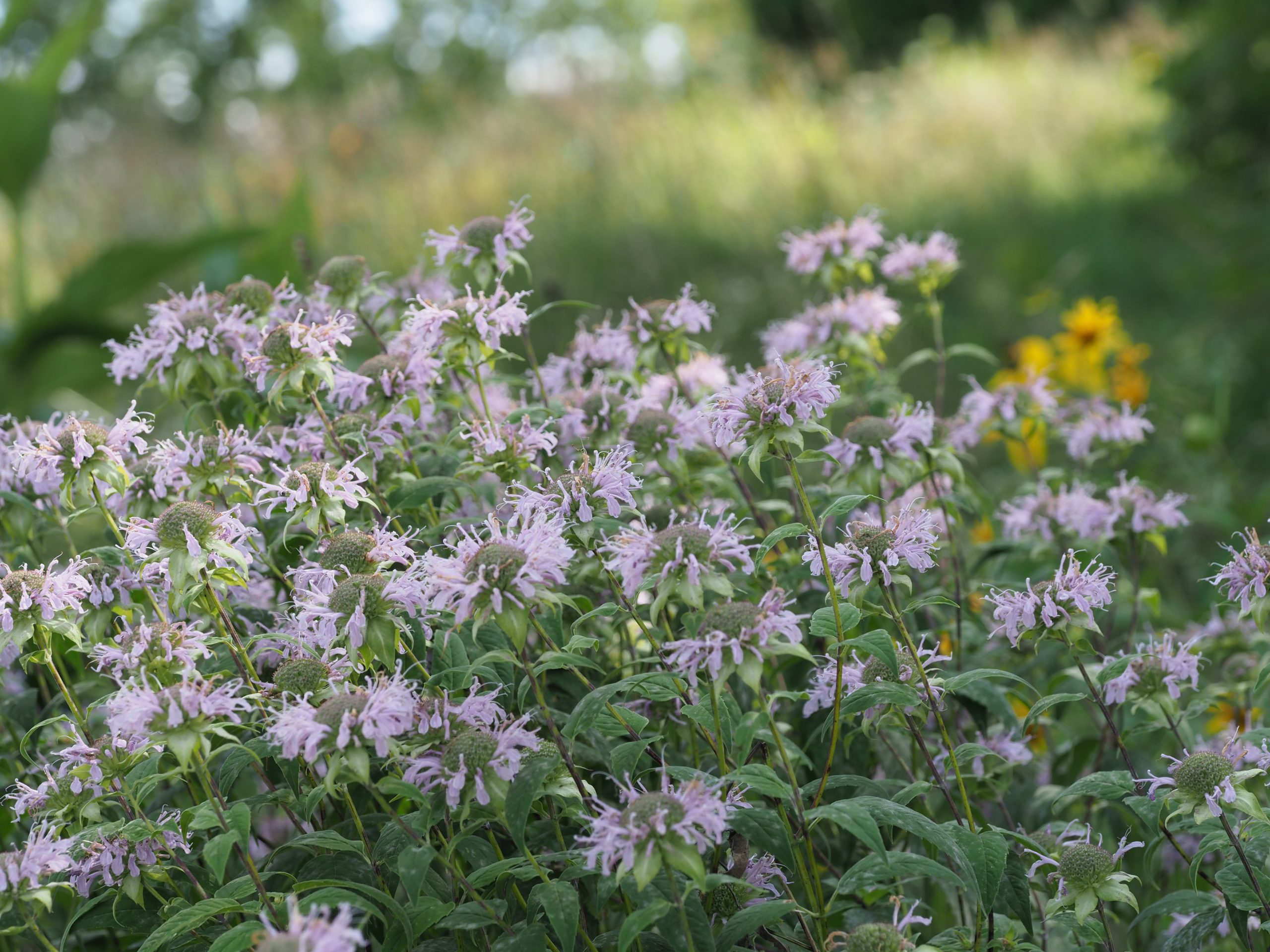
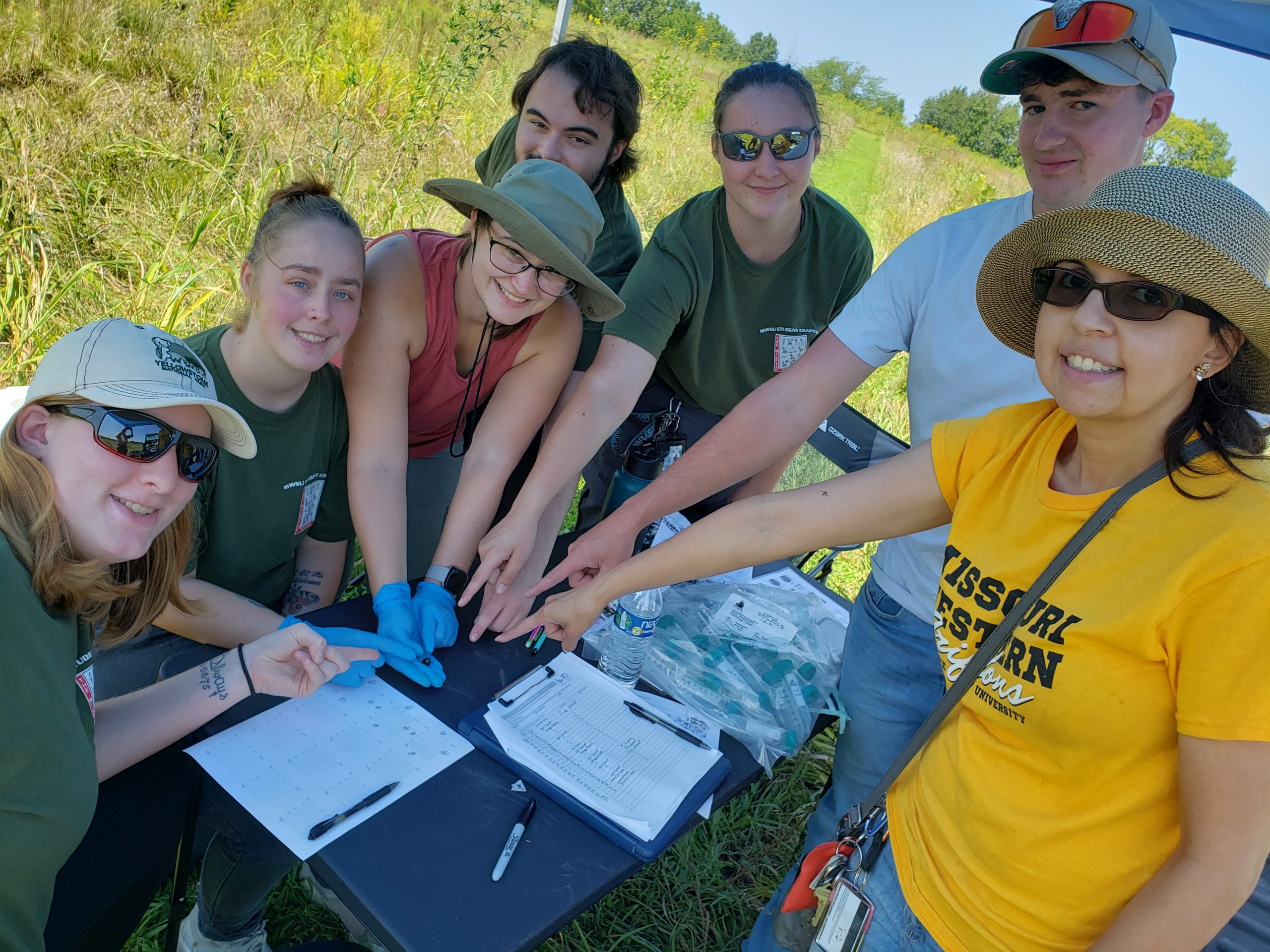
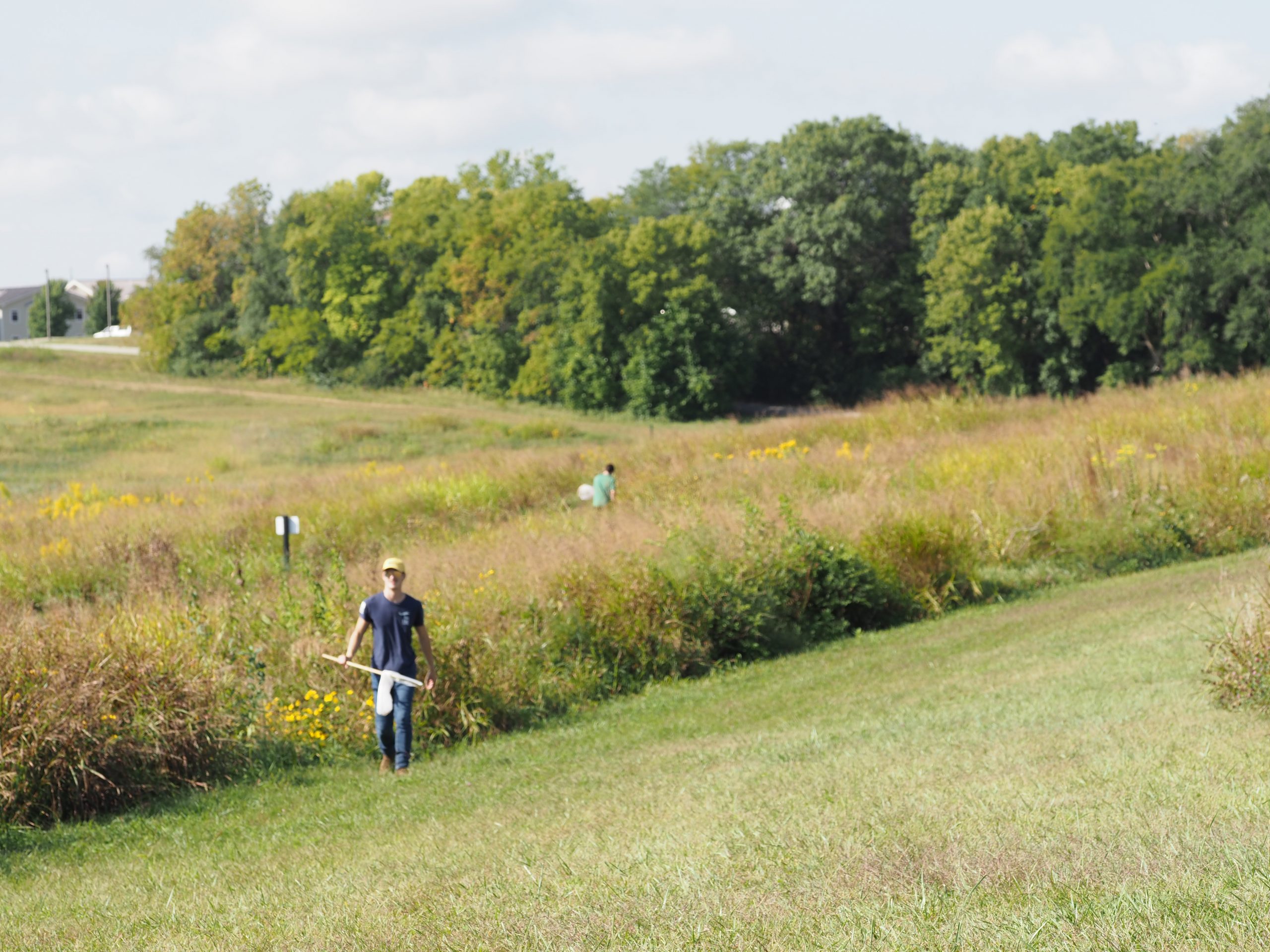
The John Rushin Teaching and Research Prairie is a 36-acre tallgrass prairie reconstruction project on the southeastern side of the MoWest campus. The prairie is located on a former hayfield and was seeded with native wildflowers and grasses in 2020. A prescribed burn in spring 2023 has helped to establish native vegetation. The campus cross-country track provides an extensive network of walking trails that wind through the prairie. The Rushin Prairie was created in partnership with the Missouri Department of Conservation, The Nature Conservancy, Missouri Master Gardeners, and the MoWest cross-country program.
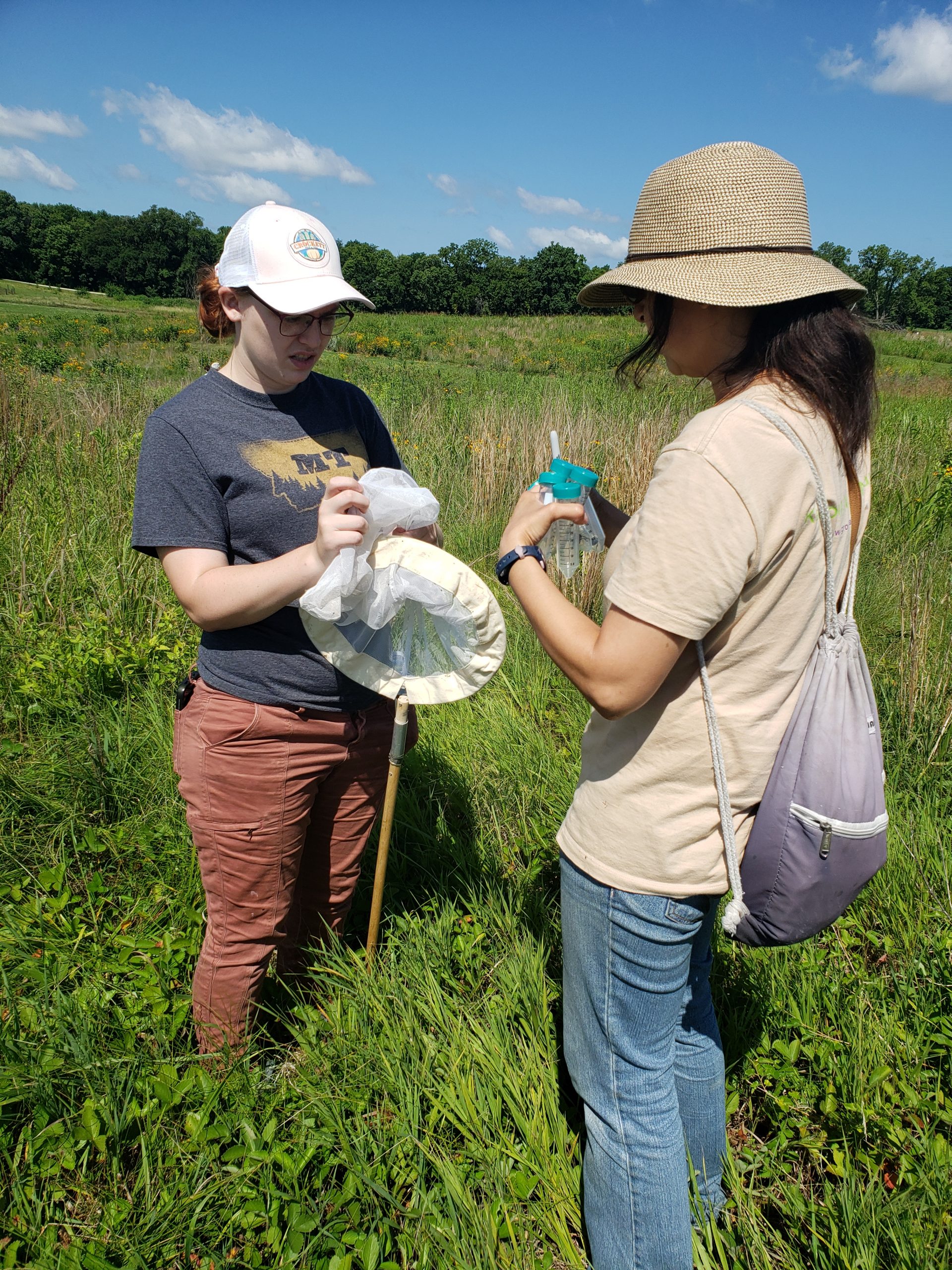
The prairie is open to the campus community and the general public and is used by MoWest biology research teams, courses, and student groups, as well as Master Naturalist groups, scout troops, the Audubon Society, and many others.
About the Prairie
The John Rushin Teaching and Research Prairie is a 36-acre tallgrass prairie reconstruction project on the southeastern side of the MoWest campus. The prairie is located on a former hayfield and was seeded with native wildflowers and grasses in 2020. A prescribed burn in spring 2023 has helped to establish native vegetation. The campus cross-country track provides an extensive network of walking trails that wind through the prairie. The Rushin Prairie was created in partnership with the Missouri Department of Conservation, The Nature Conservancy, Missouri Master Gardeners, and the MoWest cross-country program.
The prairie is open to the campus community and the general public and is used by MoWest biology research teams, courses, and student groups, as well as Master Naturalist groups, scout troops, the Audubon Society, and many others.
Why Are Prairies Important?
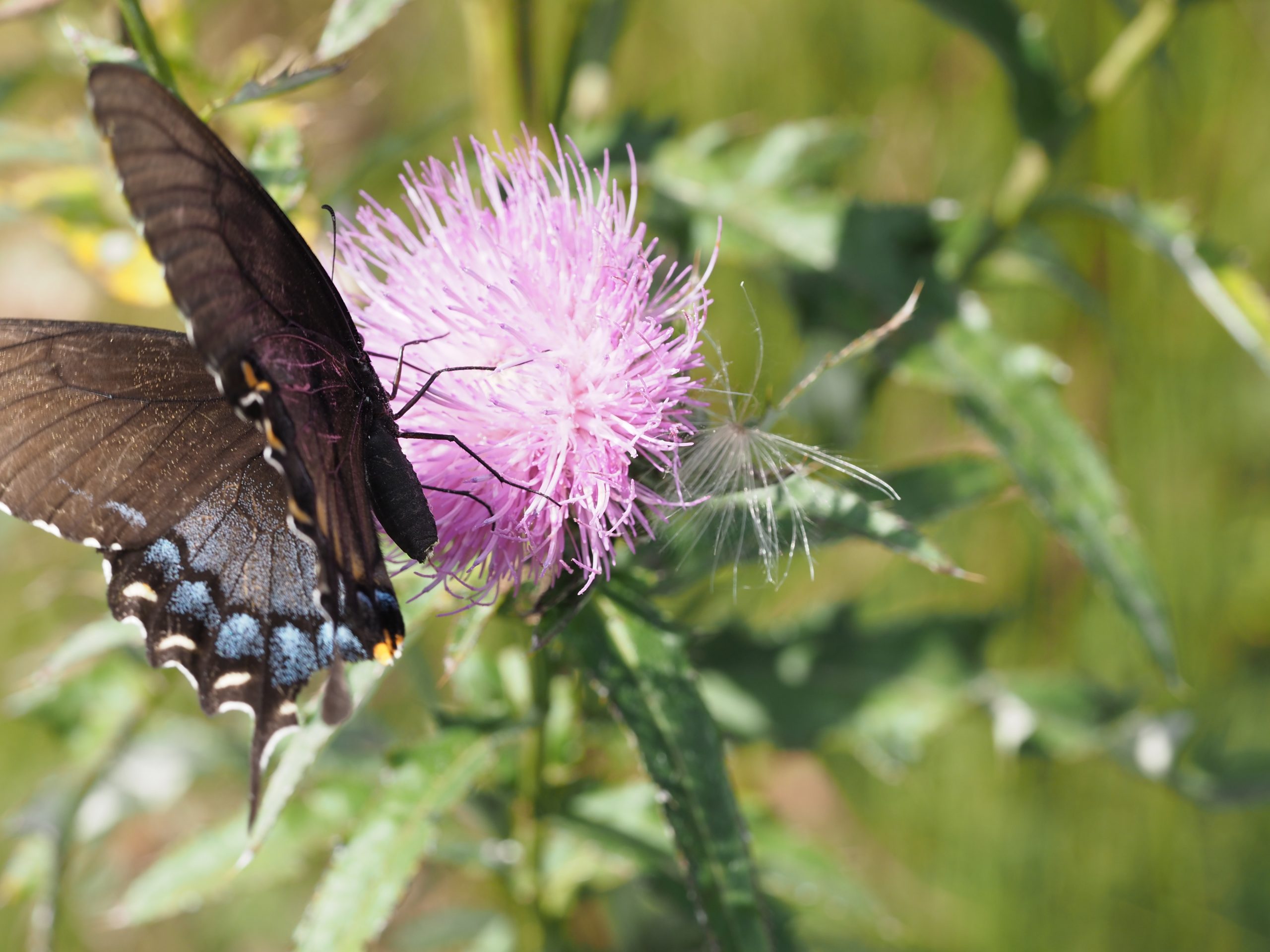
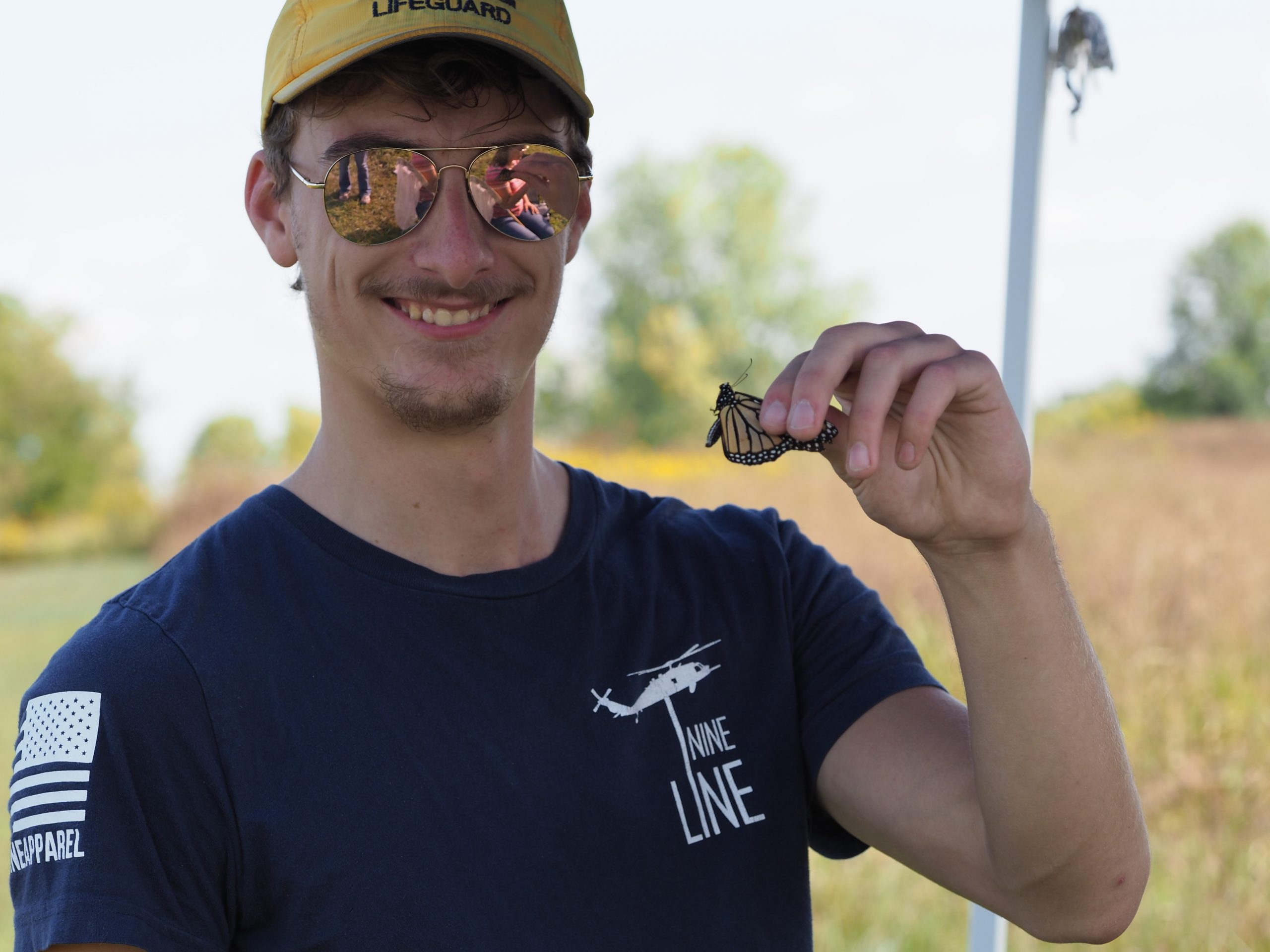
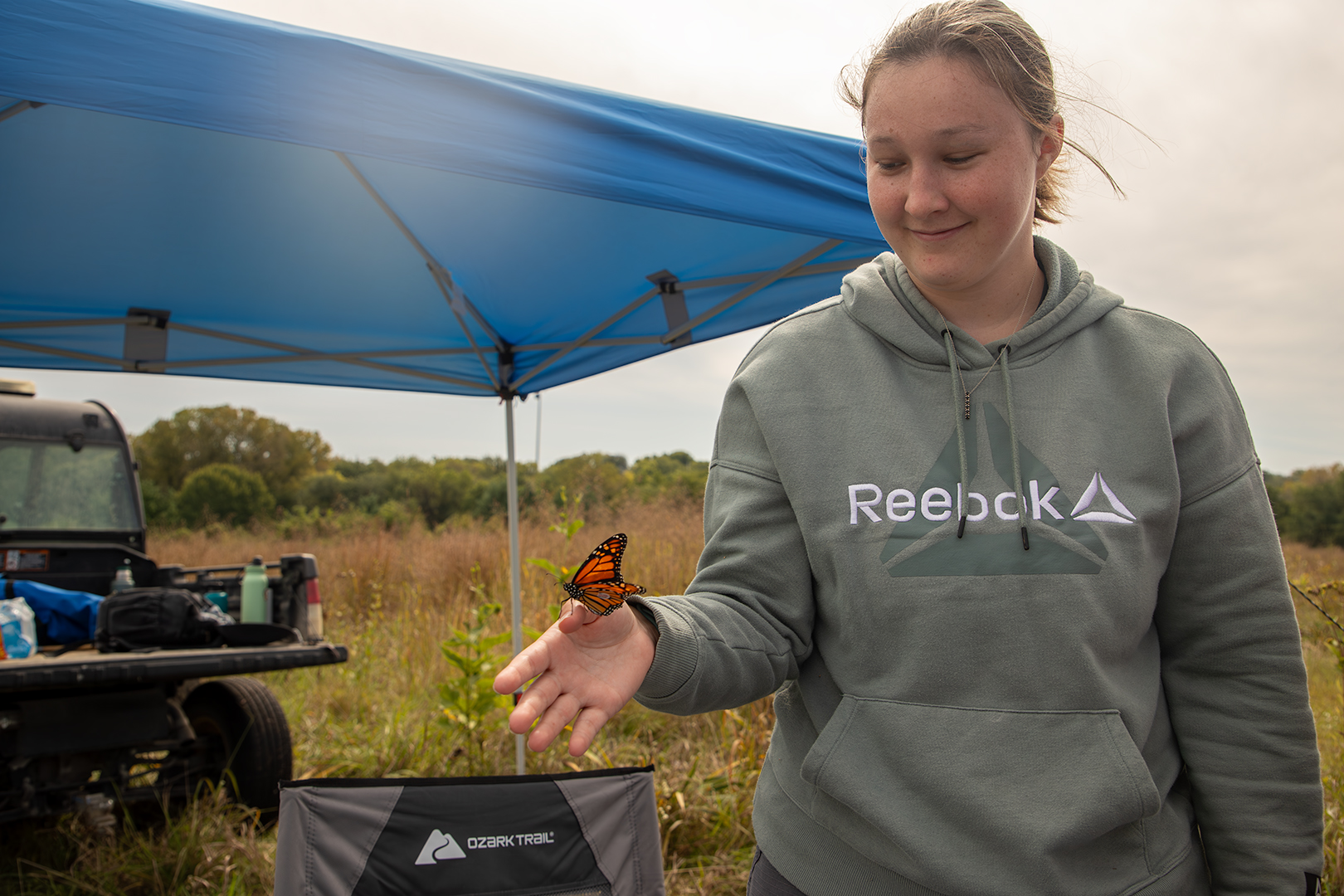
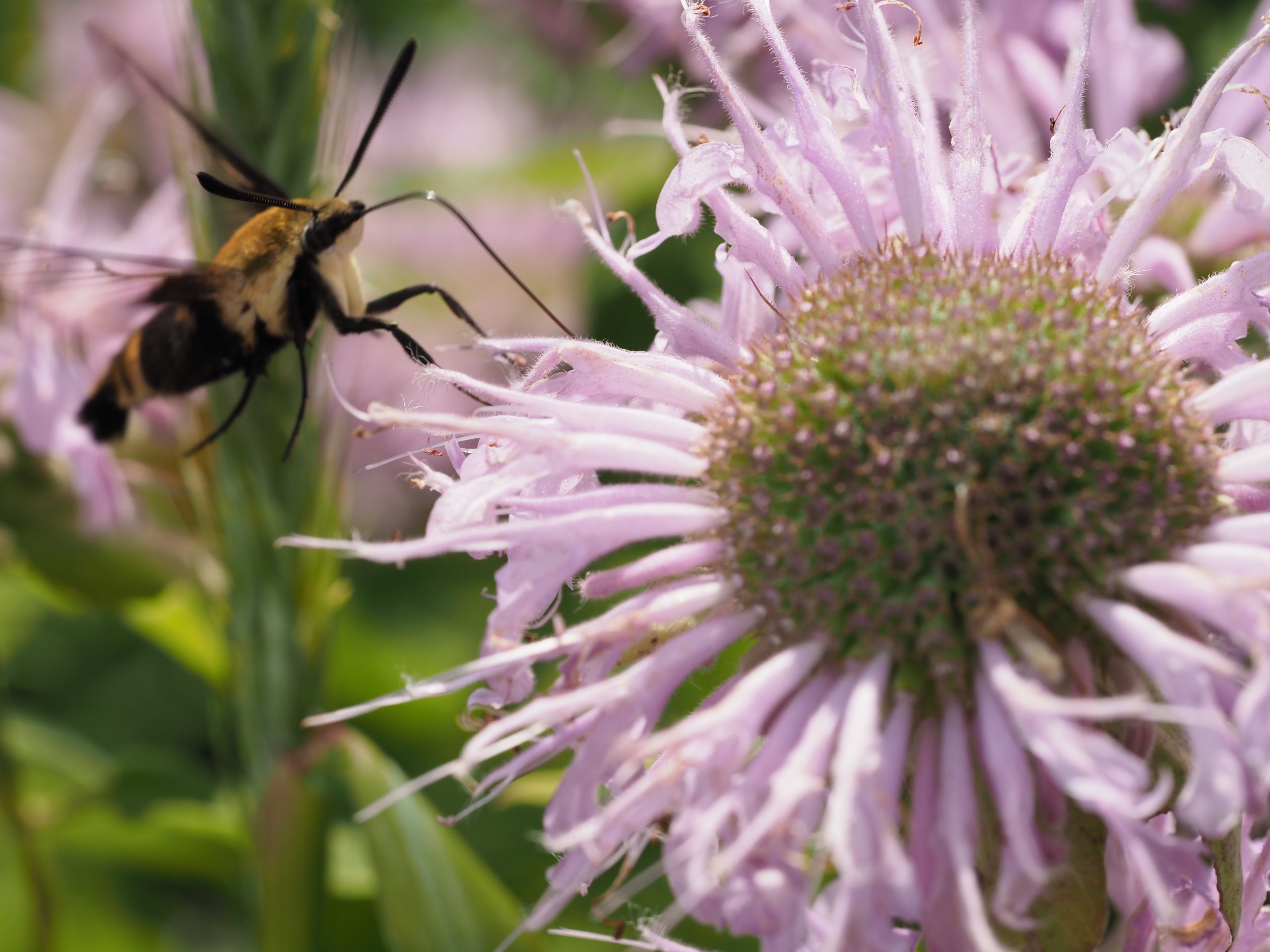
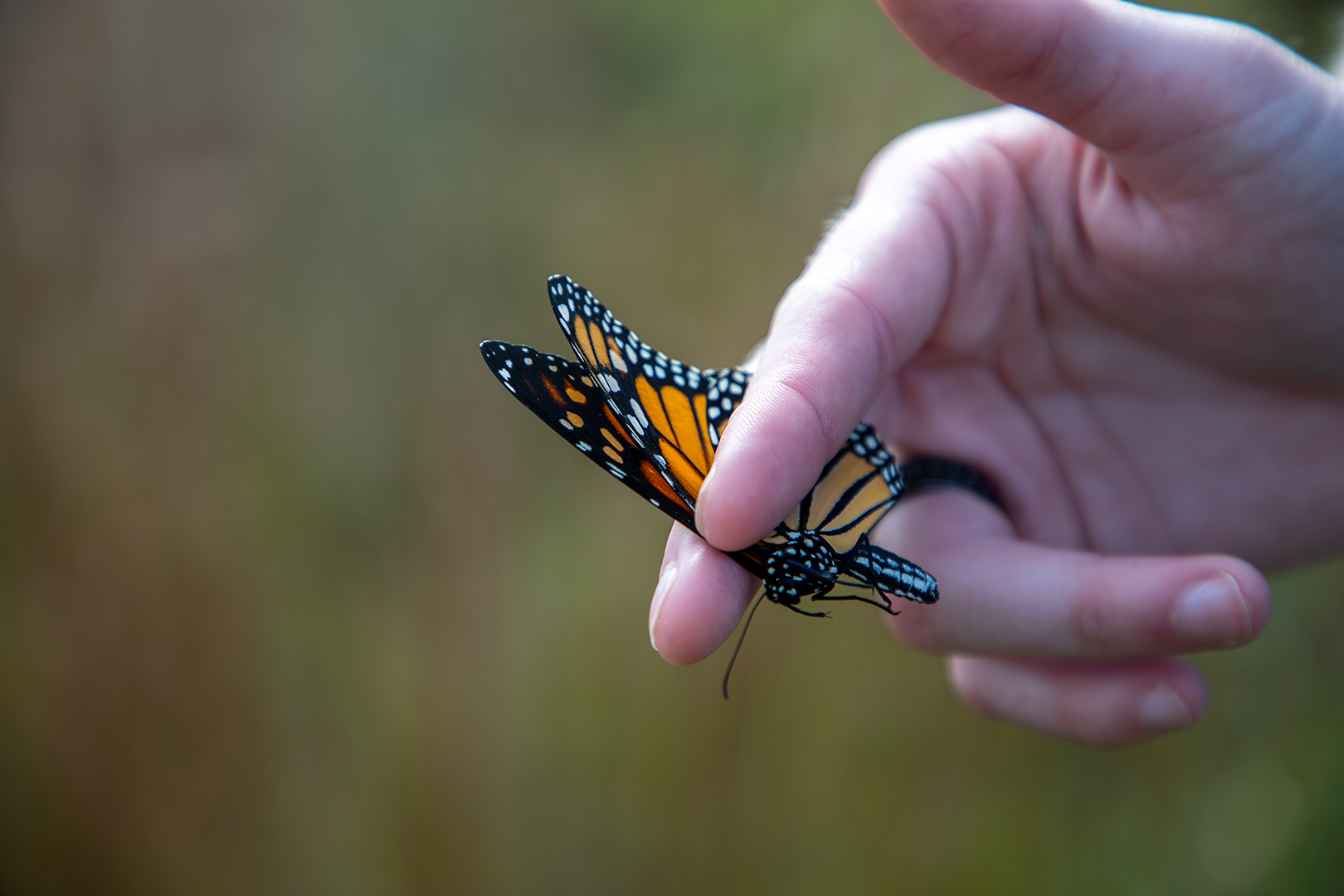
From a distance, a prairie may seem like just a patch of grass or a hayfield, but get closer and you’ll see (and hear) what makes it special. The variety of plants and animals is unlike anything you’ll find in a typical yard or roadside. A sea of flowering common milkweed (Asclepias syriaca) invites dozens of monarchs (Danaus plexippus) and other butterflies. During peak migration, hundreds or thousands of monarchs can be seen in the prairies. Uncommon bumble bee species, such as the Southern Plains Bumble Bee (Bombus fraternus) are not typically found in hayfields or urban yards, but they are abundant in Missouri’s prairies.
Prairies are also home to plants with special requirements, such as leadplant (Amorpha canescens), a small shrub that is thought to live for centuries. Its sensitivity to soil disturbances as caused by topsoil removal makes it unlikely to be found in hayfields or roadsides. However in high-quality prairies, it is found with ease. Prairie violet (Viola pedatifida), like its more commonly found relative, Viola sororia, flower early in spring and provide an important food source for pollinators. It also doubles as the host plant for fritillaries, including the regal fritillary (Speyeria idalia), a butterfly only found on high-quality prairies. Because butterflies typically rely on specific native plants as hosts, native plant biodiversity and butterfly biodiversity are intertwined.
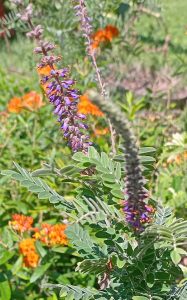 Leadplant (Amorpha canescens) with butterfly milkweed (Asclepias tuberosa) in the background.
Prairies once made up the majority of grasslands in the Midwest; however, due to development and agriculture, only about 1% of remnant (i.e. untilled) prairie remains in the state of Missouri. Prairie reconstruction techniques are vital to the reestablishment of this rare and important habitat.

Southern Plains Bumble Bee (Bombus fraternus) on native thistle (Cirsium spp.)
Southern Plains Bumble Bee (Bombus fraternus) on native thistle (Cirsium spp.)
Why Are Prairies Important?
From a distance, a prairie may seem like just a patch of grass or a hayfield, but get closer and you’ll see (and hear) what makes it special. The variety of plants and animals is unlike anything you’ll find in a typical yard or roadside. A sea of flowering common milkweed (Asclepias syriaca) invites dozens of monarchs (Danaus plexippus) and other butterflies. During peak migration, hundreds or thousands of monarchs can be seen in the prairies. Uncommon bumble bee species, such as the Southern Plains Bumble Bee (Bombus fraternus) are not typically found in hayfields or urban yards, but they are abundant in Missouri’s prairies.
Prairies are also home to plants with special requirements, such as leadplant (Amorpha canescens), a small shrub that is thought to live for centuries. Its sensitivity to soil disturbances as caused by topsoil removal makes it unlikely to be found in hayfields or roadsides. However in high-quality prairies, it is found with ease. Prairie violet (Viola pedatifida), like its more commonly found relative, Viola sororia, flower early in spring and provide an important food source for pollinators. It also doubles as the host plant for fritillaries, including the regal fritillary (Speyeria idalia), a butterfly only found on high-quality prairies. Because butterflies typically rely on specific native plants as hosts, native plant biodiversity and butterfly biodiversity are intertwined.
Leadplant (Amorpha canescens) with butterfly milkweed (Asclepias tuberosa) in the background.
Prairies once made up the majority of grasslands in the Midwest; however, due to development and agriculture, only about 1% of remnant (i.e. untilled) prairie remains in the state of Missouri. Prairie reconstruction techniques are vital to the reestablishment of this rare and important habitat.
What’s Next for the John Rushin Research Prairie?
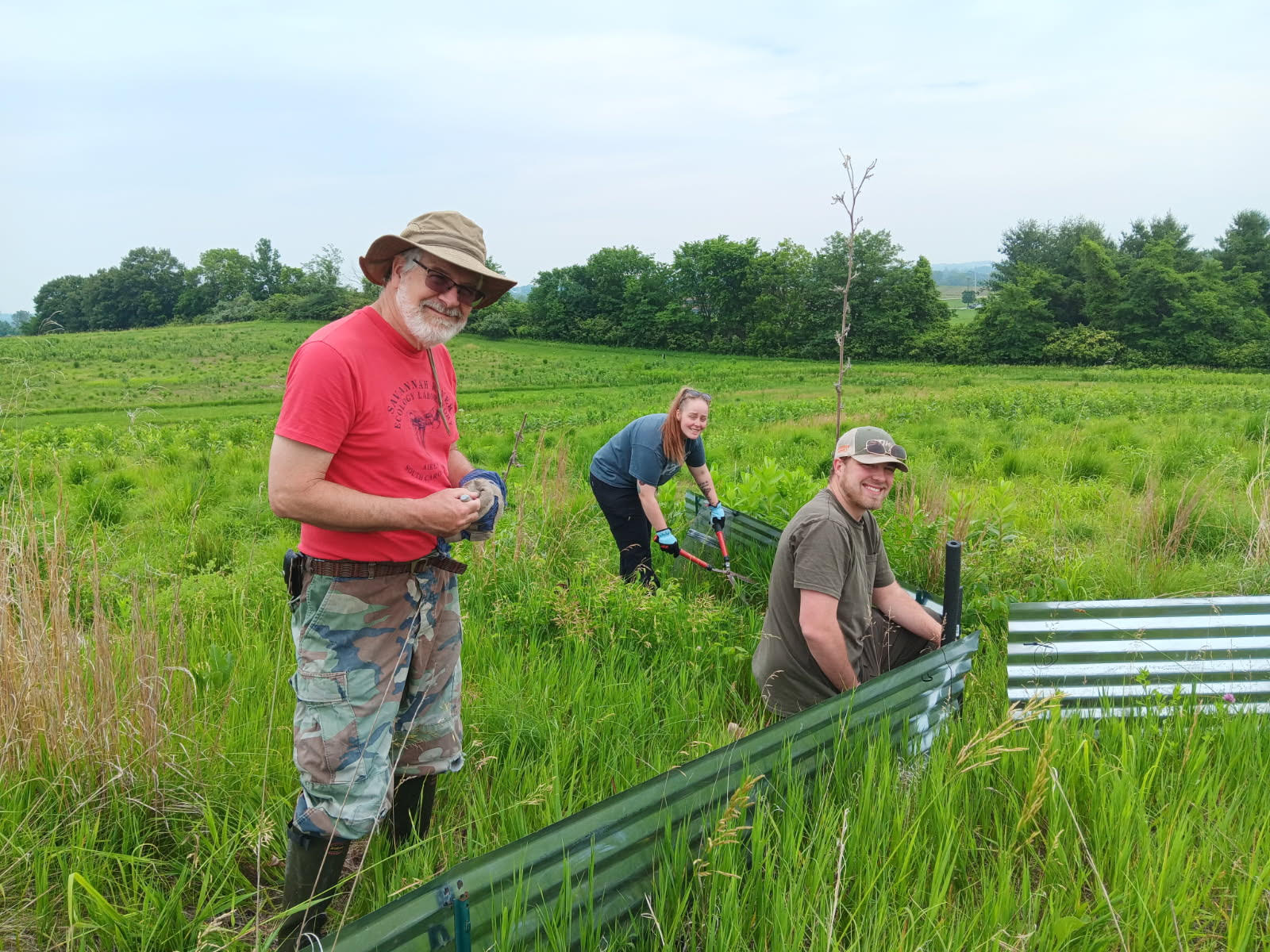
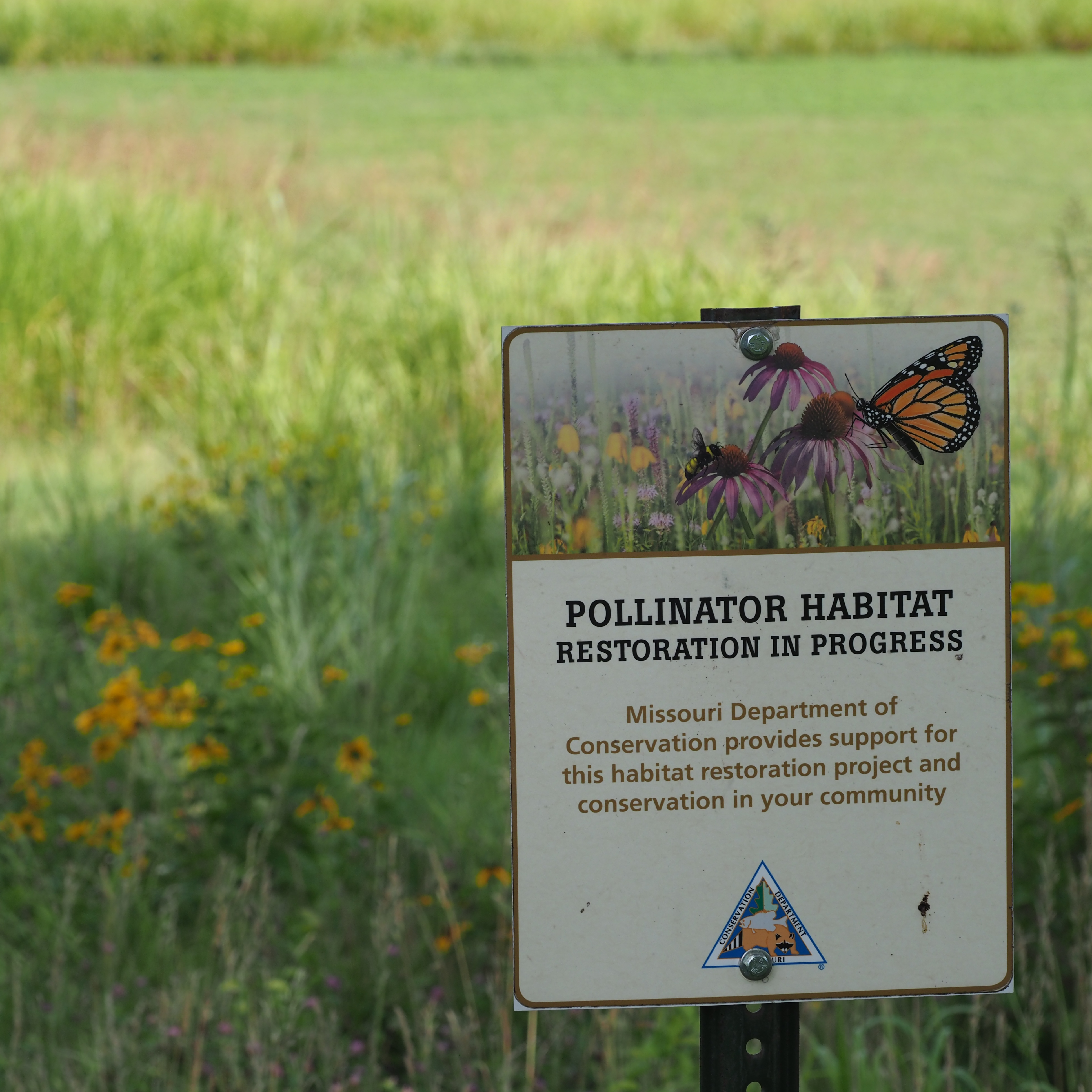
Prairie reconstructions require a lot of work and a lot of patience. It is estimated that a reconstructed prairie needs approximately 30 years before it resembles a remnant prairie with regards to soil and biodiversity (Barber, et. al.). This process necessitates a great deal of elbow grease to combat invasive species and ensure that native plant biodiversity is rich. Through collaborations with students, Master Naturalists, and other organizations, we hope that the young John Rushin Teaching and Research Prairie will mature into an ecosystem that is both beautiful and functional to all its visitors, humans and wildlife alike.
Current goals:
- Combating invasive plant species
- Measuring biodiversity
- Introducing more native plant species
Reference: “Barber NA, Chantos-Davidson KM, Amel Peralta R, Sherwood JP, Swingley WD. Soil microbial community composition in tallgrass prairie restorations converge with remnants across a 27-year chronosequence. Environ Microbiol. 2017 Aug;19(8):3118-3131. doi: 10.1111/1462-2920.13785
What’s Next for the John Rushin Research Prairie?
Prairie reconstructions require a lot of work and a lot of patience. It is estimated that a reconstructed prairie needs approximately 30 years before it resembles a remnant prairie with regards to soil and biodiversity (Barber, et. al.). This process necessitates a great deal of elbow grease to combat invasive species and ensure that native plant biodiversity is rich. Through collaborations with students, Master Naturalists, and other organizations, we hope that the young John Rushin Teaching and Research Prairie will mature into an ecosystem that is both beautiful and functional to all its visitors, humans and wildlife alike.
Current goals:
- Combating invasive plant species
- Measuring biodiversity
- Introducing more native plant species
Reference: “Barber NA, Chantos-Davidson KM, Amel Peralta R, Sherwood JP, Swingley WD. Soil microbial community composition in tallgrass prairie restorations converge with remnants across a 27-year chronosequence. Environ Microbiol. 2017 Aug;19(8):3118-3131. doi: 10.1111/1462-2920.13785
Image Gallery